

Understanding plea bargains in UK criminal courts has become increasingly important as the justice system searches for ways to handle cases efficiently while ensuring fairness. Plea bargaining is often viewed as a practical tool that helps reduce the burden on courts, but it also raises questions about fairness, pressure, and justice. Many defendants and even victims do not fully understand what plea bargains mean or how they work in the UK context. Knowing how the process operates and what the advantages and disadvantages are can help people make informed decisions when facing criminal charges.
Before unpacking the details, here are the main highlights that this article will explore:
- What understanding plea bargains in UK criminal courts really means and how it operates under current law
- The step-by-step process of how a plea bargain is reached and what legal guidance is required
- The benefits and drawbacks of plea bargains for defendants, victims, and the justice system
- A comparison of plea bargaining in the UK, United States, and South Africa
- Practical tips for defendants considering whether to accept a plea bargain
@bryanfagancriminallaw Exploring the pros and cons of a plea bargain in criminal cases. 🤔 Is it the right choice for you? Let's dive in! 💼 Contact us at 346-512-4819 to discuss your options and make an informed decision. #pleabargain #criminaldefense #legaladvice #lawyers #courtroom #justice #trending#legal #consultation #knowyourrights #consultation #freeconsultation ♬ original sound – Criminal Law
Understanding Plea Bargains in UK Criminal Courts
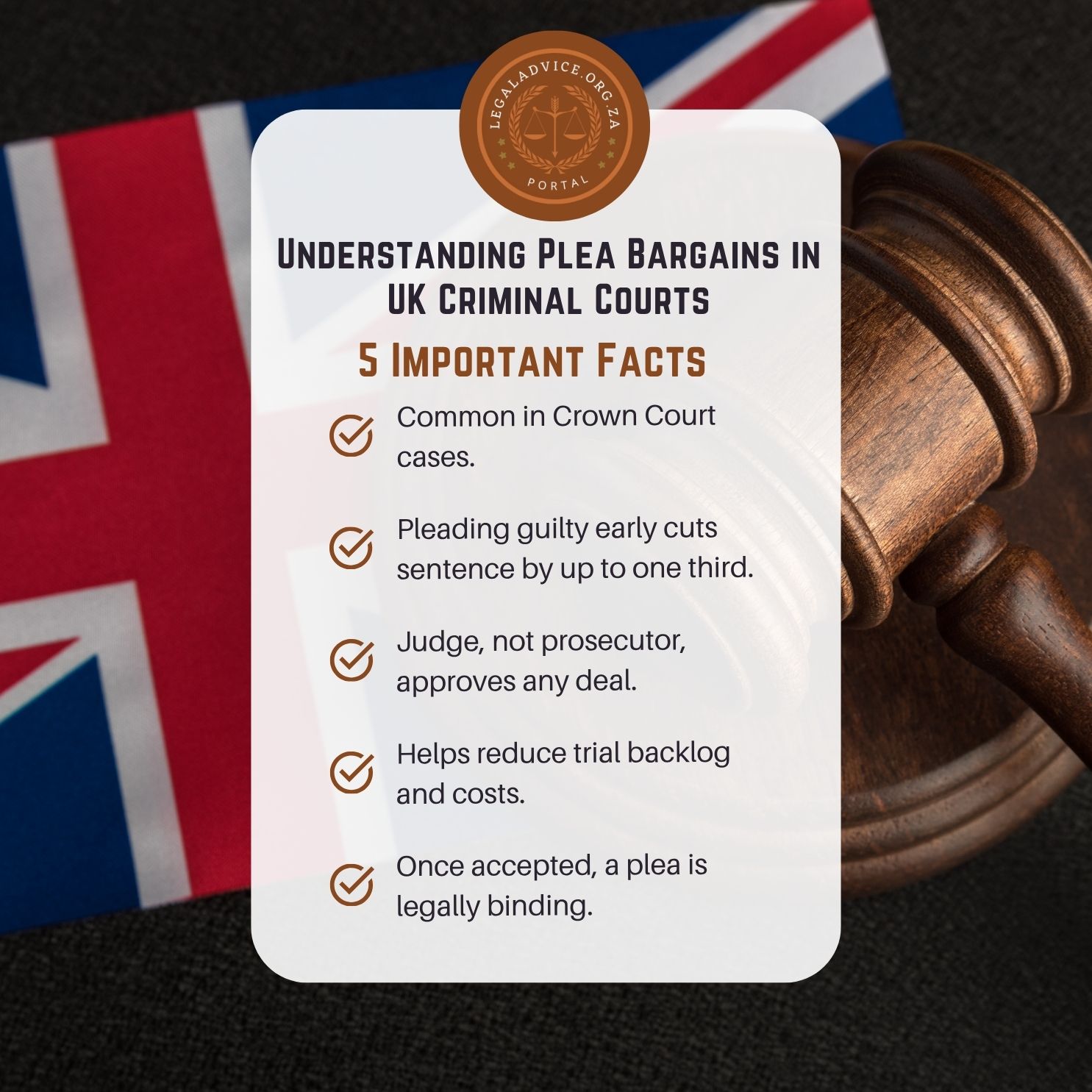
To begin understanding plea bargains in UK criminal courts, it helps to know that the system is not as formalised as in some other countries. In the UK, plea bargaining refers to an agreement between the defence and prosecution where the defendant pleads guilty to some or all charges, often in exchange for a reduced sentence or the dropping of certain charges. Although not written into a single statute, plea bargaining operates under the principles of the Criminal Justice Act 2003 and is guided by case law and Crown Prosecution Service (CPS) policy.
The first step in understanding plea bargains in UK criminal courts is recognising that judges play a key role. A judge must approve any plea deal to ensure it is fair and not the result of undue pressure. The second step involves negotiations between the defence solicitor and the Crown Prosecution Service, which typically occur before trial or during early hearings. The final step is the formal entry of the plea in court, after which the judge may offer a sentencing reduction of up to one-third if the guilty plea is entered early.
Plea bargaining in the UK is therefore not a private negotiation but a structured discussion overseen by the court. It serves the dual purpose of reducing trial backlog and providing some leniency to those who admit guilt early. However, the process must balance efficiency with justice, which is where much of the debate arises.
Step 1: Challenges and Implications of Plea Bargains in UK Criminal Courts
The first challenge in understanding plea bargains in UK criminal courts lies in perception. Some defendants see it as a way to avoid harsh sentences, while others feel pressured to admit guilt even when they are uncertain about the evidence against them. The fear of receiving a heavier sentence after trial can make plea bargaining feel like a choice without freedom. Legal experts have raised concerns about this dynamic, particularly for vulnerable defendants who may not fully understand their rights.
The second challenge is maintaining transparency. Since many plea discussions happen behind closed doors, victims and the public sometimes believe that offenders receive unfairly light sentences. This perception can damage trust in the justice system. The Crown Prosecution Service has tried to address this by requiring written records of plea discussions and judicial oversight.
Another important implication of understanding plea bargains in UK criminal courts is their effect on trial statistics. According to Ministry of Justice data, more than 60 percent of criminal cases are now resolved through guilty pleas, which shows how central plea discussions have become to the system. This efficiency saves time and resources but can also reduce the opportunity for full examination of evidence.
Step 2: Comparing Plea Bargains in Other Countries
When comparing plea bargains in UK criminal courts with other jurisdictions, significant differences emerge in how the process is regulated and perceived. In the United States, plea bargaining is deeply embedded in the legal culture. Around 90 percent of criminal cases in the US are settled through plea deals, which are negotiated directly between prosecutors and defence attorneys. Judges usually approve these agreements, and sentences are often reduced in exchange for cooperation or guilty pleas. However, critics argue that the American system encourages innocent people to plead guilty to avoid harsher penalties.
In South Africa, plea bargaining is formalised under Section 105A of the Criminal Procedure Act. The process allows prosecutors and defence lawyers to negotiate a plea and sentence agreement, which must then be approved by the court. Unlike the UK system, South African plea agreements are presented openly in court, making the process more transparent. The magistrate or judge ensures the defendant understands the implications before approval.
Australia takes a middle-ground approach. Plea bargaining exists but is guided by strict ethical rules. Prosecutors must ensure that the plea reflects the seriousness of the crime and that victims are informed of the decision. This combination of flexibility and accountability could serve as a useful model for improving understanding plea bargains in UK criminal courts.
| Country | Formal Legal Basis | Transparency Level | Average Usage Rate |
|---|---|---|---|
| United Kingdom | Case law and CPS policy | Moderate | Around 60% of cases |
| United States | Federal and state law | Variable | Around 90% of cases |
| South Africa | Criminal Procedure Act, Section 105A | High | Increasing annually |
| Australia | State-specific guidelines | High | Around 70% of cases |
Step 3: Practical Steps for Defendants Considering Plea Bargains in the UK
For anyone trying to navigate or understand plea bargains in UK criminal courts, preparation and legal advice are key. The first step is to consult a solicitor before making any decision about a plea. A qualified criminal defence solicitor can evaluate the evidence, explain likely outcomes, and assess whether the prosecution’s offer is fair.
The second step is to understand the timing. Pleading guilty early in the process can lead to a significant sentence reduction, while later pleas receive smaller discounts. This timing consideration is crucial because waiting too long can result in losing the opportunity for leniency.
The third step is to ensure that the decision is voluntary and informed. A defendant should never accept a plea simply because of fear or external pressure. Judges in UK criminal courts are required to verify that defendants understand the consequences of their plea and that it is entered freely.
For victims, understanding plea bargains in UK criminal courts can be emotionally challenging. Some appreciate quicker resolutions and reduced trauma from avoiding trials, while others feel that justice is diluted when offenders receive reduced sentences. Clear communication from prosecutors and courts can help balance these concerns.
Step 4: Improving the System of Plea Bargains in the UK
Several strategies can enhance the fairness and transparency of plea bargains in the UK. First, greater judicial oversight at earlier stages could help ensure that defendants are not misled about their options. Second, written plea agreements should be made accessible to both victims and defence counsel, reducing suspicion of backroom deals. Third, data collection on plea outcomes can help assess whether certain groups are disadvantaged or overrepresented in plea bargains.
Countries like Norway and Germany offer insights into more balanced approaches. In those systems, judges take an active role in negotiating plea agreements and ensure proportional sentencing. Adopting some of these practices could improve understanding plea bargains in UK criminal courts and strengthen confidence in the justice process.
| Suggested Improvement | Purpose | Expected Outcome |
|---|---|---|
| Early judicial involvement | To ensure fairness in negotiation | Fewer coerced pleas |
| Transparent recording | To increase accountability | Better public trust |
| Victim consultation | To include affected parties | Improved satisfaction |
| Data monitoring | To identify inequality | Evidence-based reforms |
Reflecting on Plea Bargains in UK Criminal Courts
Understanding plea bargains in UK criminal courts reveals both their practicality and their complexity. They save time and resources while allowing courts to manage heavy caseloads, yet they can also test the boundaries of fairness and voluntariness. For defendants, a plea bargain can mean reduced uncertainty and a lighter sentence, but only if made with proper legal advice. For victims, it can mean closure, though sometimes with mixed feelings about justice. The system continues to evolve as courts seek to balance efficiency with fairness, making understanding plea bargains in UK criminal courts an essential topic for anyone interested in how justice operates in practice.