

The UK Skilled Worker Visa 2026 remains one of the most popular routes for professionals looking to live and work in Britain. It allows skilled foreign workers to fill roles where there are shortages, contributing to industries such as health care, engineering, technology, and education. For employers, it is an essential tool to attract global talent, while for applicants, it is a life-changing opportunity that opens the door to permanent residency. However, the process can be complex, with strict eligibility rules and frequent rejections for minor errors. Understanding the UK Skilled Worker Visa 2026 in detail can help applicants prepare properly and avoid costly mistakes.
Before exploring the details, here are the main highlights of what this article covers:
- The full eligibility requirements for the UK Skilled Worker Visa 2026, including salary thresholds and job criteria
- The step-by-step process of how to apply and what documents are required
- The most common reasons why applications get rejected and how to prevent them
- A comparison with similar visa systems in countries such as Australia, South Africa, and the United States
- Practical tips for improving your chances of success when applying for the UK Skilled Worker Visa 2026
@camabroad I mainly used LinkedIn jobs + this chrome extension tool to find visa sponsoring companies in the UK (and how I found my current job that is skilled worker visa sponsored) #workabroad #jobsearch #jobsearchtips #visasponsorship #skilledworker ♬ original sound – Cam
Understanding the UK Skilled Worker Visa 2026
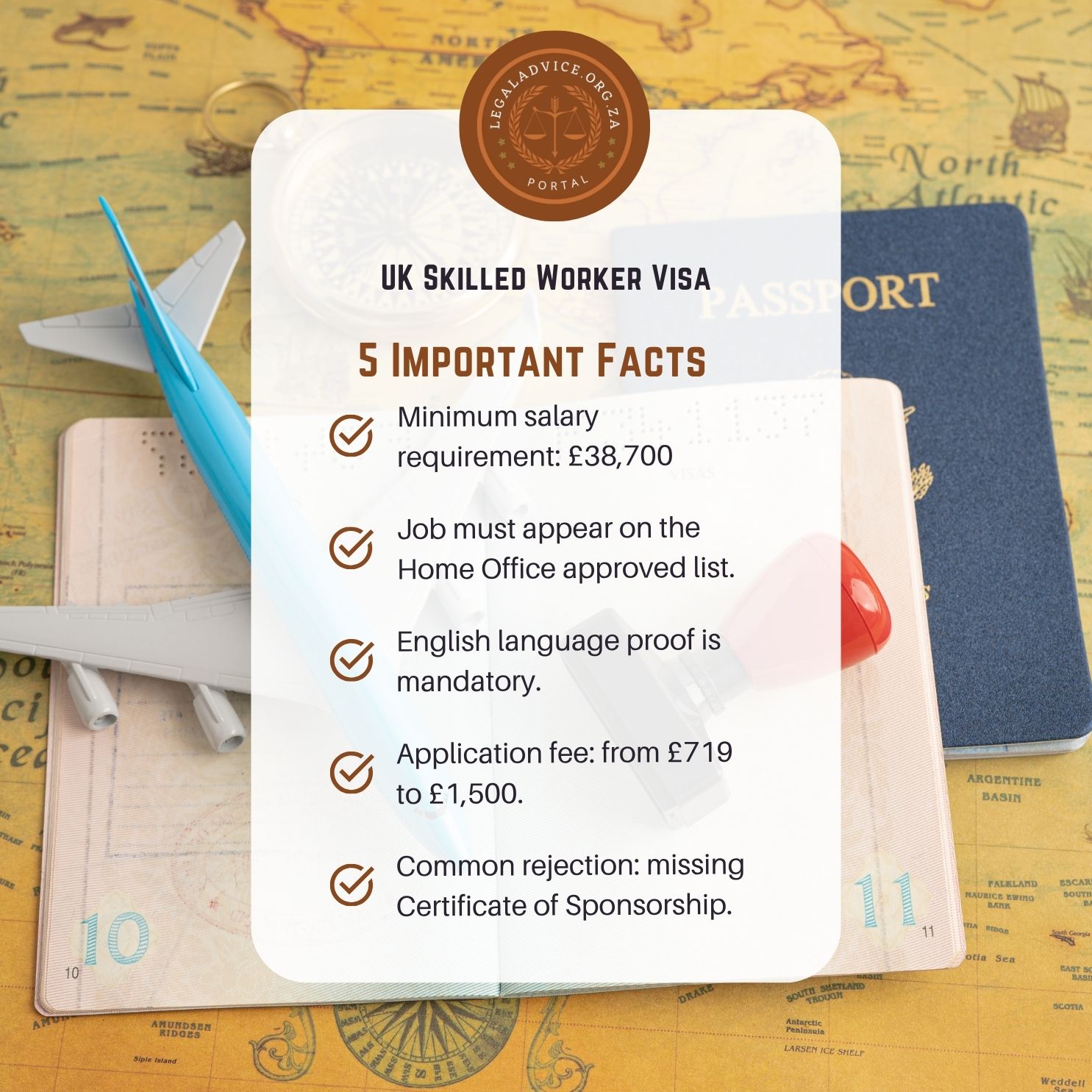
The first step to understanding the UK Skilled Worker Visa 2026 is knowing who it is designed for. This visa allows overseas nationals to work in the UK for an approved employer that holds a Home Office sponsorship licence. The job offered must be on the list of eligible occupations and meet the minimum salary threshold, which in 2026 is expected to remain around £38,700 for most roles, though certain health and education positions have lower requirements.
To qualify for the UK Skilled Worker Visa 2026, applicants must score a minimum of 70 points under the points-based system. Points are awarded for having a job offer from a licensed sponsor, meeting the salary criteria, demonstrating English language proficiency, and holding a role at the required skill level. For example, a civil engineer from India offered a full-time position in Manchester at £42,000 a year would meet both the skill and salary requirements, earning enough points to qualify.
Another key requirement is the Certificate of Sponsorship (CoS), which is issued by the UK employer. The certificate includes details about the job title, salary, and duration of employment. Applicants must also show proof of sufficient funds to support themselves, typically £1,270 in savings unless the employer agrees to cover initial expenses.
Once granted, the UK Skilled Worker Visa 2026 allows holders to live and work in the UK for up to five years. After this period, they can apply for indefinite leave to remain, provided they meet residency and employment conditions.
Step 1: Know the Application Process for the UK Skilled Worker Visa 2026
The first action to take when applying for the UK Skilled Worker Visa 2026 is to secure a valid job offer from a licensed sponsor. Applicants can check the list of approved sponsors on the official UK government website to confirm that their prospective employer is registered.
The second step is to collect all necessary documents. These include a valid passport, Certificate of Sponsorship reference number, proof of English language ability (such as IELTS or a UK degree), bank statements, and tuberculosis test results if required. For instance, a teacher from South Africa applying for a role in Birmingham would need to include an English test certificate and a recent TB clearance as part of their application.
The third step is to complete the online visa application form on the UK government portal and pay the relevant fees. In 2026, the standard visa fee ranges from £719 to £1,500 depending on the duration and location of the job. Applicants must also pay the Immigration Health Surcharge, currently £1,035 per year, which grants access to the National Health Service (NHS).
After submitting the application, biometric information such as fingerprints and a photograph are taken at a visa application centre. The processing time typically takes three to eight weeks depending on the applicant’s country of residence.
| Step | Task | Approximate Time | Notes |
|---|---|---|---|
| 1 | Secure a job offer from a licensed sponsor | Varies | Must meet skill and salary criteria |
| 2 | Gather required documents | 1–2 weeks | Ensure all originals and translations are valid |
| 3 | Complete online application and pay fees | 1 day | Includes NHS surcharge |
| 4 | Attend biometric appointment | 1–2 weeks | Check available centres |
| 5 | Wait for visa decision | 3–8 weeks | May vary by country |
Step 2: Identify Common Rejection Reasons and How to Avoid Them
The most common reason for UK Skilled Worker Visa 2026 rejections is incomplete or incorrect documentation. Many applicants fail to provide an accurate Certificate of Sponsorship or forget to include financial proof. Others submit expired test results or missing pages in their passports.
The second common cause of rejection is failing to meet salary or job eligibility criteria. Each occupation code has a defined salary range, and even minor discrepancies can result in refusal. For example, a data analyst offered £34,000 when the minimum for that occupation is £36,100 would automatically fail eligibility checks.
Another major issue is inconsistency between the job title and job description on the Certificate of Sponsorship. The Home Office compares these details closely to ensure that the role truly matches an eligible occupation. Language test errors are also frequent—scores below the required level of B1 on the Common European Framework of Reference for Languages can lead to automatic rejections.
To avoid these problems, applicants should double-check all forms, use certified translations for non-English documents, and ensure all information matches across every document. Working with a registered immigration adviser can also significantly reduce the risk of mistakes.
Step 3: Compare Skilled Worker Visa Systems in Other Countries
When comparing the UK Skilled Worker Visa 2026 to similar systems abroad, the UK’s process is more structured but slightly stricter. In Australia, the Skilled Independent Visa (Subclass 189) operates on a points system too, but applicants do not need a job offer—they can apply based on skills and experience. This flexibility attracts professionals who want to migrate before securing employment.
In South Africa, skilled immigration is regulated by the Critical Skills Visa programme, which requires applicants to have qualifications and experience in a recognised occupation on the national critical skills list. However, this visa often takes longer to process than the UK equivalent.
In the United States, the H-1B Visa is the closest equivalent to the UK Skilled Worker Visa 2026. It allows professionals in specialised fields to work temporarily for US employers. The main difference is that H-1B visas are limited by an annual cap, while the UK visa system does not have a strict quota.
| Country | Visa Type | Requires Job Offer | Processing Speed | Main Limitation |
|---|---|---|---|---|
| United Kingdom | Skilled Worker Visa 2026 | Yes | 3–8 weeks | Salary and sponsorship limits |
| Australia | Skilled Independent Visa (Subclass 189) | No | 6–12 months | Limited yearly quotas |
| South Africa | Critical Skills Visa | Not always | 4–6 months | Bureaucratic delays |
| United States | H-1B Visa | Yes | 6–9 months | Annual cap and lottery system |
These comparisons show that while the UK Skilled Worker Visa 2026 requires more documentation, it offers a clear pathway to permanent residency for qualified professionals.
Step 4: Strengthen Your Application and Improve Your Chances
To improve your chances of success, the first step is to ensure that your job offer aligns perfectly with an eligible occupation code. Always verify that your employer’s sponsorship licence is valid before applying.
The second step is to prepare strong supporting evidence. This includes detailed reference letters, education certificates, and employment records that clearly match your proposed role. For example, a software developer applying for a role in Edinburgh could include previous project documentation and reference letters confirming relevant experience in programming and data systems.
The next step is to submit your application early and monitor for any updates from the Home Office. If you are applying with dependants, make sure their documentation—such as marriage or birth certificates—is up to date and correctly translated.
Finally, consider applying for priority or super-priority processing if you need a faster decision. These options cost more but can reduce waiting time to as little as five working days.
| Step | Action | Benefit |
|---|---|---|
| 1 | Match job title and salary with occupation list | Avoids automatic rejection |
| 2 | Prepare complete supporting documents | Strengthens credibility |
| 3 | Apply through licensed sponsor | Meets legal requirements |
| 4 | Use priority services if available | Saves time |
| 5 | Keep copies of all documents | Helps with appeal or future renewal |
Reflecting on the UK Skilled Worker Visa 2026
The UK Skilled Worker Visa 2026 remains a key gateway for global talent to join the British workforce. It balances opportunity with regulation, ensuring that only genuine and qualified professionals fill essential roles. While the process can seem demanding, preparation and accuracy make all the difference. By understanding eligibility, following each step carefully, and avoiding common mistakes, applicants can turn what seems like a bureaucratic process into a successful move toward a new life in the United Kingdom. The UK Skilled Worker Visa 2026 continues to shape the country’s global workforce—and for skilled professionals, it remains one of the most rewarding paths to build a long-term career in Britain.